


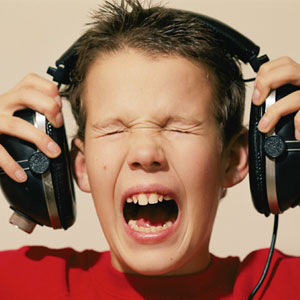
School-aged children often pop on a pair of headphones to listen to music. But could prolonged use of headphones eventually cause hearing damage?
The authors of a study in the January print issue of Pediatrics examined the results of hearing tests of 4,310 adolescents ages 12 to 19 taken as part of National Health and Nutrition Examination Surveys.
The study, “Prevalence of Noise-Induced Hearing-Threshold Shifts and Hearing Loss Among U.S. Youths,” published online Dec. 27, found that exposure to loud noise or music through headphones increased from 19.8 percent in 1988-1994 to 34.8 percent in 2005-2006.
Overall rates of hearing loss did not change significantly between the two time periods, however –except for one type of hearing loss among adolescent females.
In 1988-1994, 11.6 percent of teen girls had noise-induced threshold shift, a type of hearing loss caused by exposure to loud noise. But in 2005-2006, the rate had increased to 16.7 percent.
The findings suggest that increased exposure to recreational noise and minimal use of hearing-protection devices might have increased female teenagers’ prevalence of noise-induced threshold shift to a level previously seen only for boys.
Yet headphones are not necessarily the culprit.
The study authors conclude that the increased loss in females may be due to other factors not reflected in the questionnaire, such as amplified music at concerts and clubs.
The conclusion? More should be done to educate teenagers about the dangers of excessive noise. Chronic exposure to loud noise may not cause hearing loss in the short term, but it can gradually result in irreversible hearing loss later in life.
Your Baby checkup
what are the vaccinations that he should have taken until now?
Generate a report for my baby.
Track Your Baby Vaccinations
Find Your Baby name
Mohandessin
01002195777
01000012400
0233048350
Beverly Hills
01000012900
0238576831
El Tagamo3
Al Sheikh Zayed
02- 38514031
01000608597